Peugeot Boxer
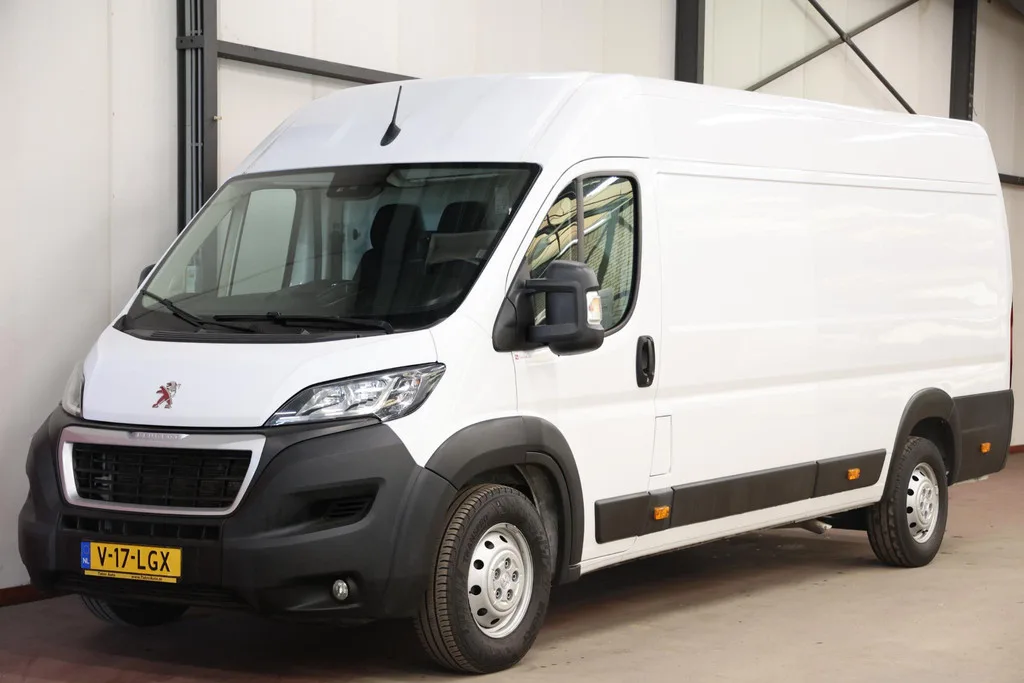
The Peugeot Boxer is Peugeot's large van and has been supplied in the current body generation since 2006. The model was developed within the Sevel joint venture and shares its engineering with the Citroen Jumper and Fiat Ducato; production takes place in Val di Sangro (Italy). The Boxer is available as a closed panel van in four lengths and three roof heights, and also as a chassis cab, pick-up and double cab, which is why the model is often used as a base for refrigerated, box and crane bodies and for motorhomes. In the Netherlands the Boxer mainly runs with construction and installation companies, in parcel and DIY-store distribution and in rental fleets. Since late 2020 there has also been a fully electric e-Boxer, which received a considerably larger battery pack with the 2024 facelift.
Boxer III (2006-2014) (2006-2014)
Completely new generation on the Sevel platform (X250), shared with the Citroen Jumper and Fiat Ducato. New body with L1 to L4 and H1 to H3, front-wheel drive and a load volume of up to 17 m3. From 2011 the engine range was updated to Euro 5 with 110, 130 and 150 hp.
Engines
| Engine | Fuel | Contents | Power | Torque | Standard | Transmission |
|---|---|---|---|---|---|---|
| 2.2 HDi 100 2006-2011 |
diesel | 2,2 l | 100 pk (74 kW) | 250 Nm | Euro 4 | 6-speed manual |
| 2.2 HDi 120 2006-2011 |
diesel | 2,2 l | 120 pk (88 kW) | 320 Nm | Euro 4 | 6-speed manual |
| 3.0 HDi 157 2006-2011 |
diesel | 3,0 l | 157 pk (115 kW) | 400 Nm | Euro 4 | 6-speed manual |
| 2.2 HDi 110 2011-2014 |
diesel | 2,2 l | 110 pk (81 kW) | 250 Nm | Euro 5 | 6-speed manual |
| 2.2 HDi 130 2011-2014 |
diesel | 2,2 l | 130 pk (96 kW) | 320 Nm | Euro 5 | 6-speed manual |
| 2.2 HDi 150 2011-2014 |
diesel | 2,2 l | 150 pk (110 kW) | 350 Nm | Euro 5 | 6-speed manual |
| 3.0 HDi 160 2011-2014 |
diesel | 3,0 l | 160 pk (116 kW) | 400 Nm | Euro 5 | 6-speed manual |
Boxer III facelift (2014-2024) (2014-2024)
Facelift with a new front end, new dashboard and revised interior; the body dimensions remained unchanged. The 2.2 HDi and 3.0 HDi made way for the 2.0 BlueHDi (110, 130 and 160 hp) with AdBlue, which was replaced in 2019 by the 2.2 BlueHDi with 120, 140 and 165 hp. At the end of 2020 the fully electric e-Boxer was added with a 37 or 70 kWh battery pack.
Engines
| Engine | Fuel | Contents | Power | Torque | Standard | Transmission |
|---|---|---|---|---|---|---|
| 2.0 BlueHDi 110 2016-2019 |
diesel | 2,0 l | 110 pk (81 kW) | 300 Nm | Euro 6 | 6-speed manual |
| 2.0 BlueHDi 130 2016-2019 |
diesel | 2,0 l | 130 pk (96 kW) | 340 Nm | Euro 6 | 6-speed manual |
| 2.0 BlueHDi 160 2016-2019 |
diesel | 2,0 l | 160 pk (118 kW) | 350 Nm | Euro 6 | 6-speed manual |
| 2.2 BlueHDi 120 2019-2024 |
diesel | 2,2 l | 120 pk (88 kW) | 310 Nm | Euro 6d | 6-speed manual |
| 2.2 BlueHDi 140 2019-2024 |
diesel | 2,2 l | 140 pk (103 kW) | 350 Nm | Euro 6d | 6-speed manual |
| 2.2 BlueHDi 165 2019-2024 |
diesel | 2,2 l | 165 pk (121 kW) | 370 Nm | Euro 6d | 6-speed manual |
| e-Boxer 37 kWh 2020-2024 |
electric | 37 kWh | 122 pk (90 kW) | 260 Nm | 200 km | automatic (1 gear) |
| e-Boxer 70 kWh 2020-2024 |
electric | 70 kWh | 122 pk (90 kW) | 260 Nm | 340 km | automatic (1 gear) |
Trim levels
Boxer / e-Boxer facelift (2024-present) (2024-present)
Second facelift with a new front end in the Peugeot family style, a new dashboard with digital instrument cluster and a more extensive package of driver assistance systems. The 2.2 BlueHDi comes with 120, 140 and 180 hp, with the 180 hp replacing the earlier 165 hp and the 140 and 180 hp also available with an eight-speed automatic. The e-Boxer was given a 200 kW electric motor and a 110 kWh battery with a WLTP range of up to approximately 420 km.
Engines
| Engine | Fuel | Contents | Power | Torque | Standard | Transmission |
|---|---|---|---|---|---|---|
| 2.2 BlueHDi 120 2024-present |
diesel | 2,2 l | 120 pk (88 kW) | 310 Nm | Euro 6e | 6-speed manual |
| 2.2 BlueHDi 140 2024-present |
diesel | 2,2 l | 140 pk (103 kW) | 350 Nm | Euro 6e | 6-speed manual or 8-speed automatic |
| 2.2 BlueHDi 180 2024-present |
diesel | 2,2 l | 180 pk (132 kW) | – | Euro 6e | 6-speed manual or 8-speed automatic |
| e-Boxer 110 kWh 2024-present |
electric | 110 kWh | 270 pk (200 kW) | 400 Nm | 420 km | automatic (1 gear) |
Trim levels
The dimensions at a glance
Of the Peugeot Boxer there are 24 versions, load length 267 cm to 407 cm, load volume 8,0 m³ to 17,0 m³. The full dimensions table by version, with wheelbase, exterior dimensions, width between the wheel arches and Euro pallets, is on the dimensions page.
What the Boxer is known for
- Load volume of 8 to 17 m3 and payload up to approximately 1,900 kg, depending on version and gross vehicle weight
- Load area 1,870 mm wide with 1,422 mm between the wheel arches, so Euro pallets fit in all lengths
- Wide choice of chassis cabs and platform cabs for conversions, which is why the model is often used as a base vehicle
- Large supply on the Dutch used market and a wide dealer and service network for Peugeot commercial vehicles
- Since 2024 available with a 110 kWh battery and a WLTP range of up to approximately 420 km in the electric e-Boxer
What to look out for on a used example
- The 2.2 HDi (2006-2014) and 2.0 BlueHDi (2014-2019) have a timing belt with a prescribed replacement interval; ask for the invoices. The 2.2 BlueHDi from 2019 has a timing chain.
- On Euro 6 diesels, check the particulate filter and the AdBlue system: many short trips and city work lead to more frequent regeneration and to faults in the AdBlue dosing unit.
- Check the sliding door rails and rollers and inspect the floor pan, wheel arches and the bottom of the rear doors for corrosion; heavily laden examples wear fastest here.
- On heavily laden vans the clutch, brakes and rear leaf springs are prone to wear; on the e-Boxer, also check the battery certificate and charging history.
These points apply to the model in general. What applies to a specific vehicle depends on its maintenance history; we discuss this for every vehicle we sell.
Compare the Boxer with another model
Only models of the same size, so the comparison is fair.
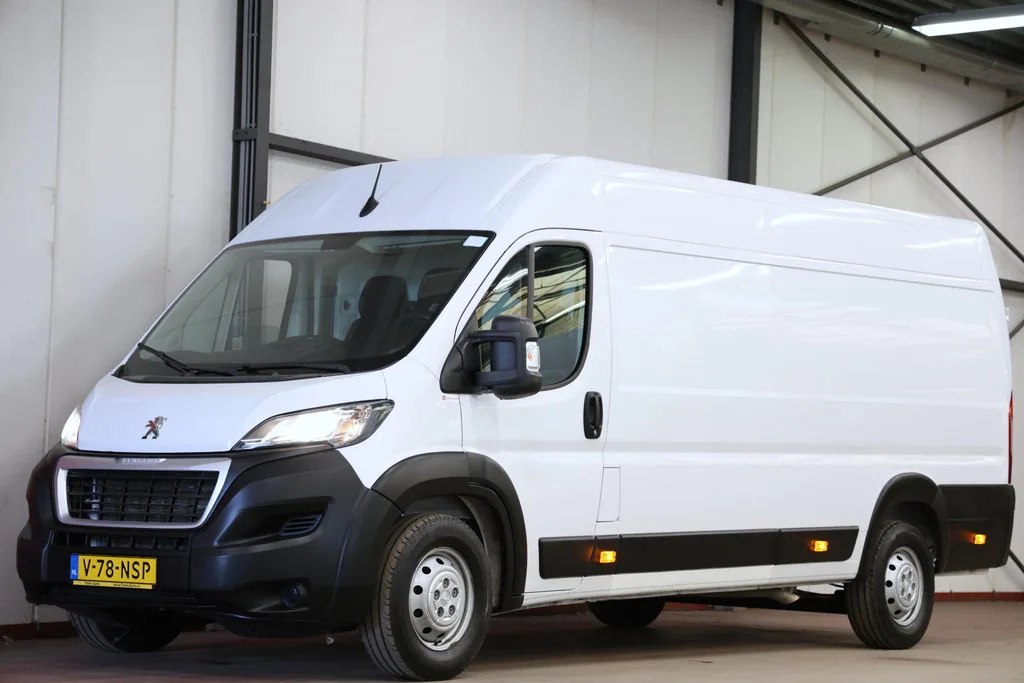
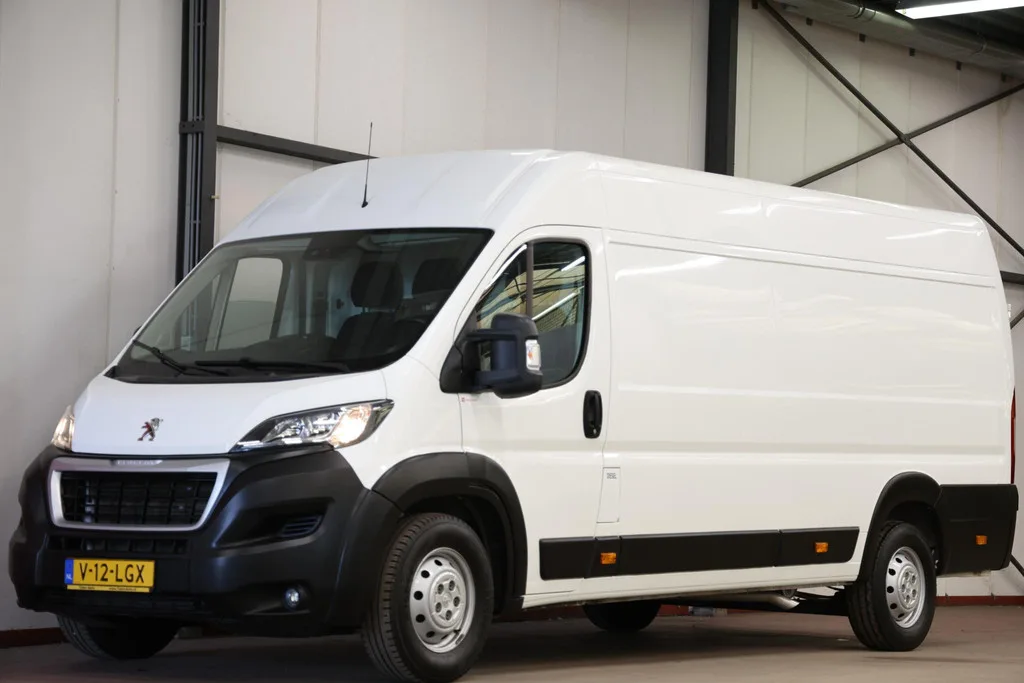
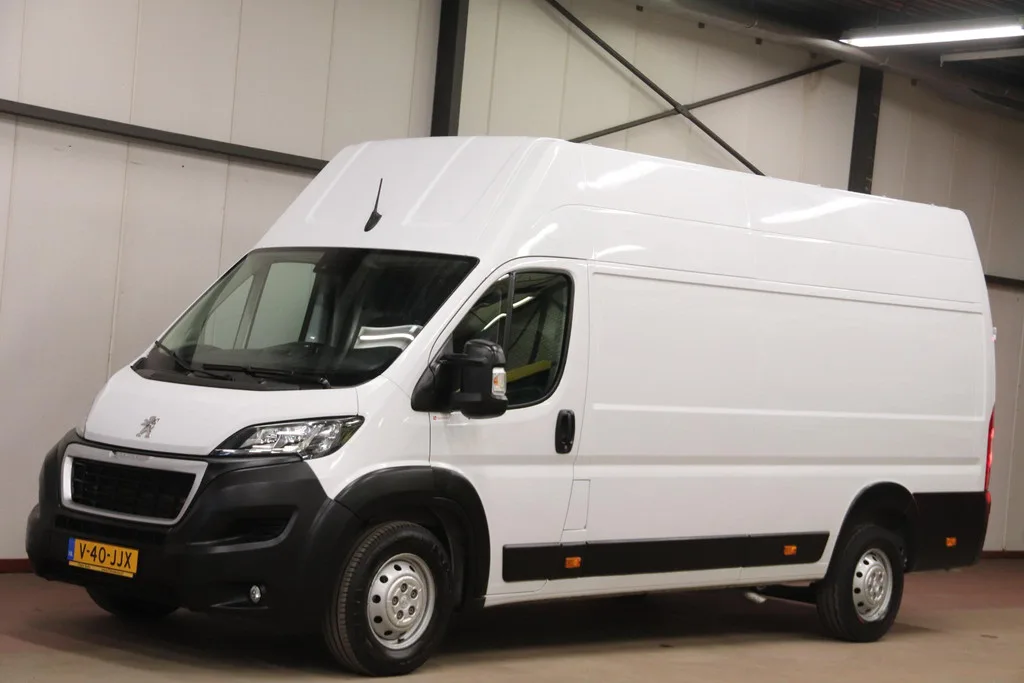
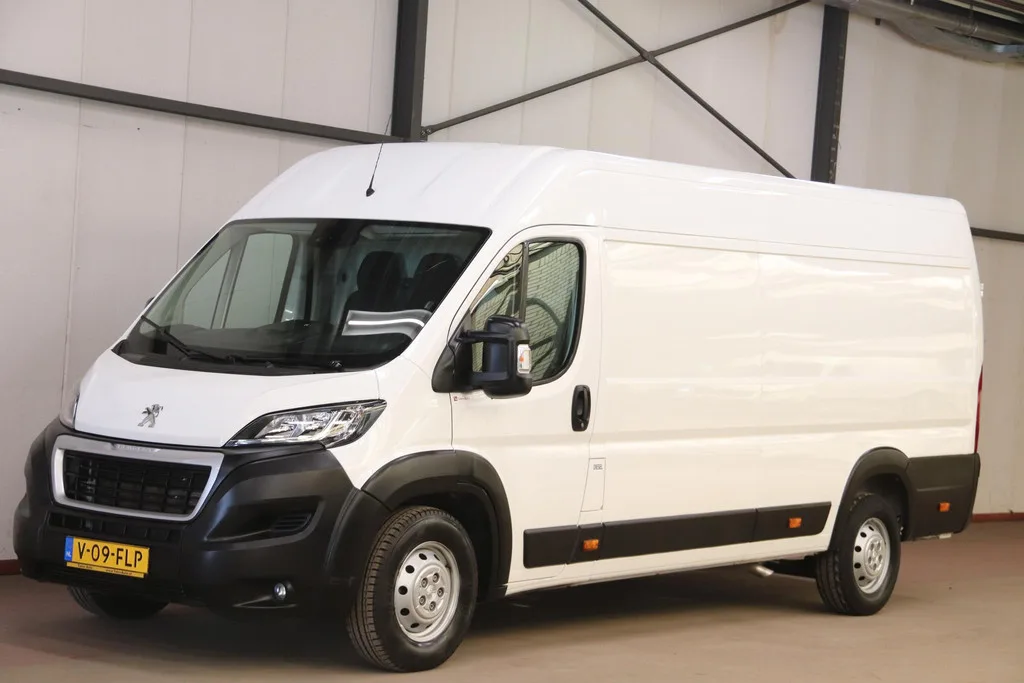
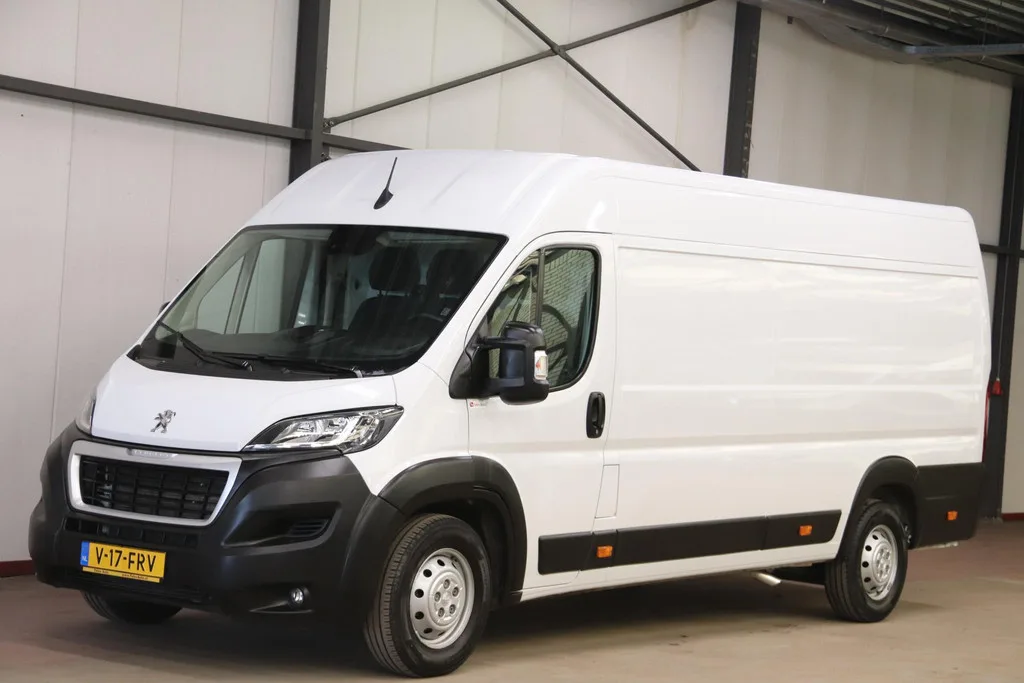
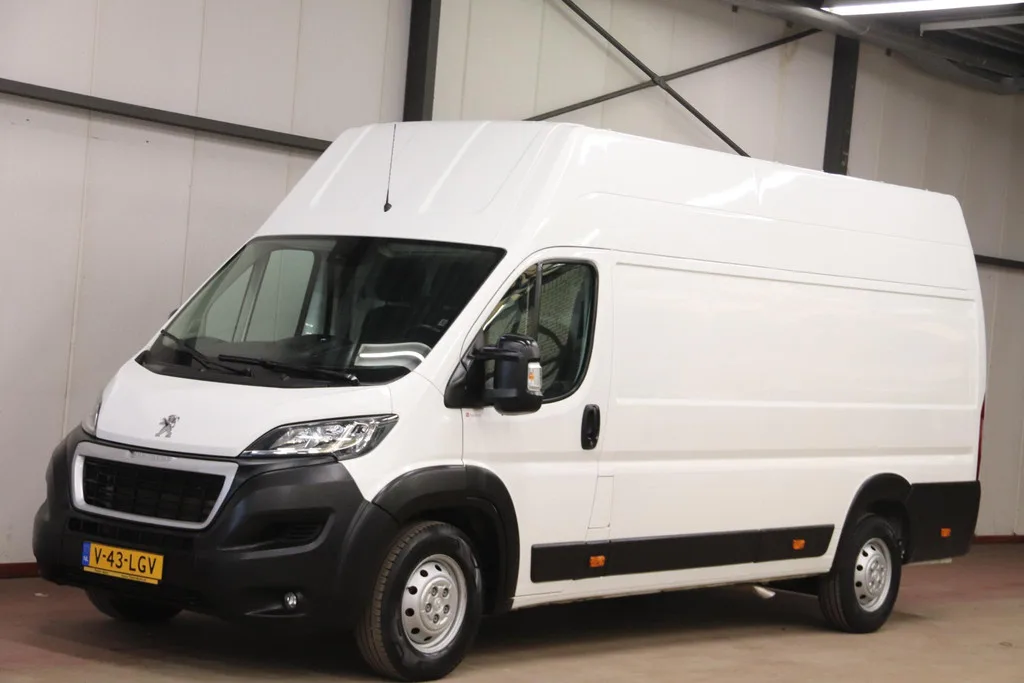
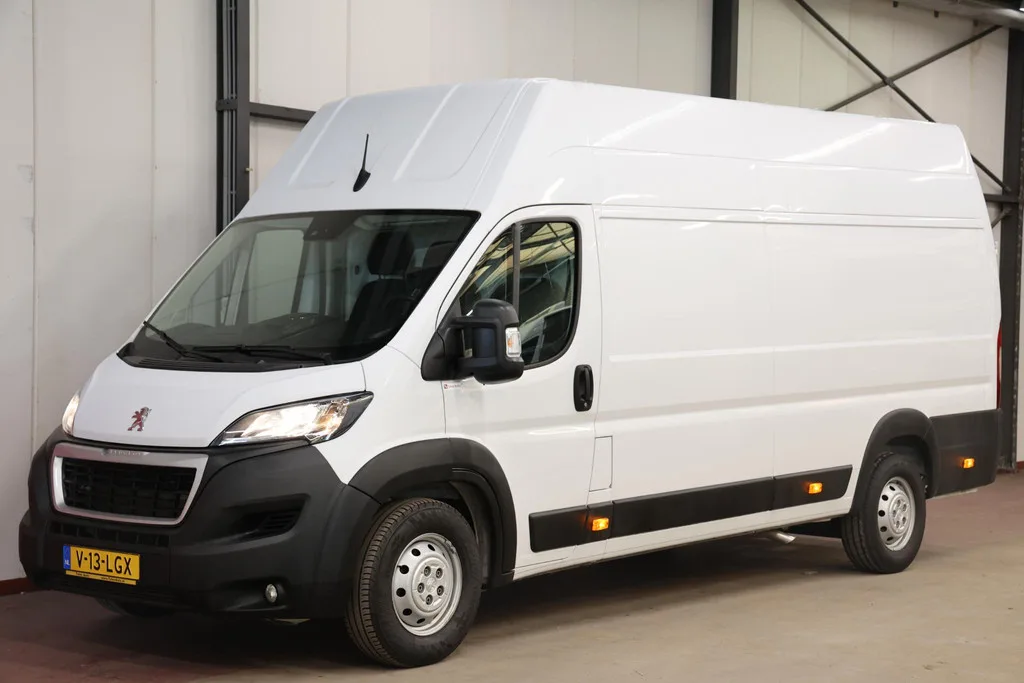
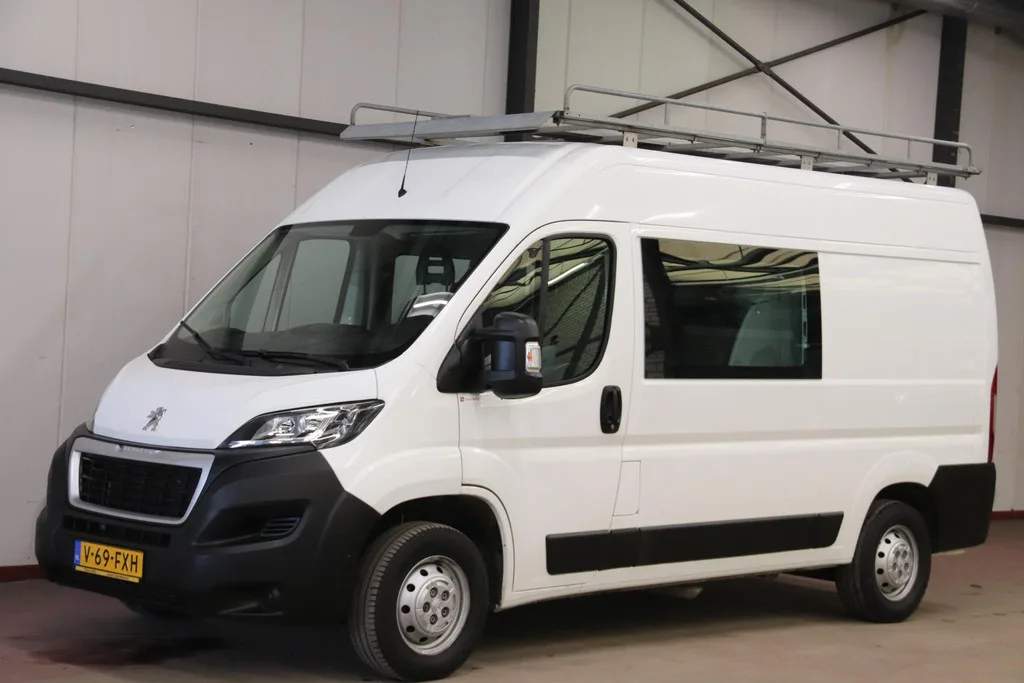
11× Peugeot Boxer in stock


Sources of technical data: Parkers - Peugeot Boxer van review (engines, trims, service intervals), Honest John Vans - Used van buying guide: Peugeot Boxer 2006-2019, UltimateSpecs - Peugeot Boxer (X290) L2H1 335 BlueHDi 165, L'argus - Peugeot Boxer et e-Boxer (2024): prix et gamme, ZERauto.nl - Dit is de nieuwe Peugeot e-Boxer: alle details, Camperland - Motoren Peugeot Boxer BlueHDi (DW12) 140 en 165 pk, Peugeot Nederland - Boxer en e-Boxer showroom